• Home
  • Why Greenstone
    • Sustainability
    • Sensory gardens
    • Health & Well-being
    • About us
  • Services
    • Therapeutic gardens for health and well being >
      • Active ageing
    • Commercial / public space >
      • Urban design >
        • Air quality
      • Care Homes | Dementia gardens for the elderly >
        • Social and therapeutic horticulture
        • Healing gardens
    • Natural playgrounds >
      • Natural Play
      • Inclusive play area design
  • News
    • Award-winning design
    • Community projects
  • Links
  • Contact Us
  • Gallery
  • Books I Media
    • Reviews
GSD NZ - Sustainable, healthy landscape architecture + design
BUY the book! Landscape and urban design for health & well-being
         About us | Contact us | Our Blog |  Like us on  Facebook

Landscape and Urban Design for Health and Well-Being - Routledge Press, August 2014

3/10/2014

9 Comments

 
In 2012 Greenstone Design was newly launched in New Zealand. Founder, Gayle Souter-Brown, had a dream to build a team of passionate people to serve the needs of communities across Australasia. She had started with Greenstone Design UK and was keen to use her experience of UK, Europe, and Africa at home. First though, she needed to get the message out that we need to re-evaluate the landscape component in our development schemes. New housing, affordable housing, schools, hospitals and care homes have been designed and built with low cost amenity strips that do little to lift mood, alleviate social isolation, raise aspiration. Some people would say there was no money to do anything else. How could a garden, a patch of grass or a tree do anything other than look pretty, let alone boost health and well-being? Gayle Souter-Brown would say "you don't need a bigger budget, you just need to think a little, to see the connections and create the opportunities". 

After a lengthy scientific peer review process of the book proposal, in November 2012 a contract with Routledge Press, London, was signed. It detailed that a book would be researched and written, within 12 months, explaining to academics and practitioners why it was worth their while rethinking their approach and their expectation of what was achievable. It had to be 100,000 words long and include 200 full colour images, +/- 10%, or the contract would be forfeited. The title took a while to finalise but the editor decided the more key words the more likely it was that people would find the book, read it, and act. Landscape and Urban Design for Health and Well-Being: Using Healing, Sensory and Therapeutic Gardens was delivered as a manuscript, late, on the 6th January 2014. 

It took 8 months of Routledge Press's editing, copy editing and typesetting, checking and double-checking, to bring the book to fruition as a 318 page paper and ink reality. On 6th August 2014 it was released into the European market. 6 weeks later it was printed simultaneously in New York and Toronto and released in Canada, the US, NZ and Australia. 

Meanwhile, the real work has continued. The design team has grown. Greenstone Design UK has flourished, with new projects in Russia, Tanzania and of course, nationally around the UK. Enquiries for an eco resort project in Azerbaijan are responded to with as much dedication as a small London charity in need of a community space. Greenstone Design in NZ has grown to become recognised as providing leading research-based design and review services. Public space - the gritty streetscapes, hospitals, schools, dementia care and aged care, Early Childhood centres and social housing have all been subjected to the Greenstone Design signature salutogenic design appraisal. Examples from these projects fill the book, sitting alongside research and discoveries from the world's greatest thinkers.

There is a blog by Gayle Souter-Brown, about Salutogenic Design, on Routledge's website . Biophilia, bio-diverse planting, planting for health and well-being, soft landscapes and sensory-rich spaces are all part of the recipe for a healthy dose of Landscape and Urban Design for Health and Well-Being: Using Healing, Sensory and Therapeutic Gardens. 
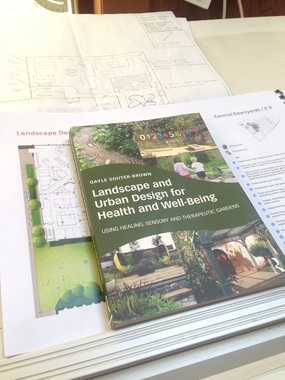
Landscape and Urban Design for Health and Well-Being ; Using Healing, Sensory and Therapeutic Gardens
9 Comments

Urban design for health and well being

22/9/2014

20 Comments


This week I'm travelling the length of NZ with the NZIA. I and 2 other urban designers - Steve Thorne and Dr Angelique Edmonds - are presenting the 2014 urban design speaker series.

It is interesting to see who comes along. The 3 presentations all come from different perspectives but each reach the same conclusion. Urban design for health and well being is more than just an interesting topic of research , more than a soon-to-be short-lived 'new fangled idea' . Urban design for health and well being offers architects, planners and policy makers an opportunity to contribute to the liveability ratings and functional wellness of a community.

It requires big thinking and a collaborative approach. If we take responsibility for our designs we acknowledge the impact environmental design can make. Community gardens, roof top gardens, parks and pocket green space combine with the built environment to affect mental health, stress and depression. These problems occur within education, social housing and the workplace, in fact wherever there are people who are stressed by their environment. In these situations salutogenic design interventions become cost effective, achievable goals.

We are getting the message out but more people need to join the conversation. We have both a challenge and an opportunity to fundamentally make a difference to the health and well being if our client communities. Care to join us?

20 Comments

Feeling the health benefits of nature, through "Forest Bathing" 

16/7/2013

24 Comments

 
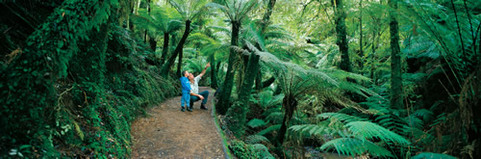
Forest bathing in a biophilic city, Wellington, NZForest bathing in a biophilic city, Otari reserve, Wellington, New Zealand
Forest bathing or Shinrin-yoku refers to time spent walking in forests. In Japan the practice has been studied by forestry, agriculture and health officials. The rest of the world is now catching on to the idea that rather than being a nice-to-have feature, urban forests are vital to balance the health effects of modern life.

Walking in forests (shinrin-yoku) may prevent the onset of chronic illnesses like cancers, reduce blood pressure, heart rate and stress hormones (which may have a preventive effect on hypertension).  It is also credited with creating calming psychological effects through changes observed in parasympathetic and sympathetic nerves. 

Forest bathing appears to increase the level of serum adiponectin--a hormone that in lower concentrations is associated with obesity, type 2 DM (diabetes mellitus), cardiovascular disease, and metabolic syndrome, among other metabolic disorders. A combined study found shinrin-yoku reduces anxiety, depression, anger, fatigue and feelings of emotional confusion.

For the full study findings, click here

24 Comments

Urban farms, urban food growing, resilient community

3/7/2013

0 Comments

 
Picture
There are growing numbers of people around the world interested in making a difference. They work within their local  communities, often as volunteers, to bring people together, to improve human health and well-being, and at the same time respect the environment on which we all depend. 

The TED talk by Pam Warhurst describes how she and a small group of friends created an urban food growing initiative in Todmorden, England. They worked with local farms to boost supply of goods to the town. They worked with local schools to bring agriculture into the classroom, and the classroom out into the local economy, onto the former wasteland to create urban agriculture.

On my study tour of Berlin last week I visited urban farms where people, young and old, and across all cultural groups can come together to grow fruit and vegetables and rear animals for food. In areas with the most social deprivation access to cheap fresh food has transformed local health outcomes. Interestingly, the stressed execs also profess to benefit from access to the urban food growing initiatives. While they may not work in the gardens they love visiting, and spend time regularly to check on the progress of young animals, new crops, and see how the people, their new friends, are getting on. 

The urban farm has brought people together in an unexpected way. Although initially devised as a project for the more vulnerable members of the community, in fact it has become a win:win situation for all. The reduced carbon footprint from local food growing helps mitigate climate change. Human health and well-being is intrinsically linked to the ecological health of our planet and our local environment. Biophilic cities offer a way to connect people to nature and living things in a way we have missed out on for 2-3 generations. We are hard-wired to respond to nature. We need to boost our green infrastructure as we build resilient communities. Long lived shade trees planted around the farm add to the green capital of the neighbourhood, reduce the urban heat island effect, help absorb and slow storm water runoff, while sequestering carbon and providing valuable central city habitat for a range of invertebrates and birds.

0 Comments

Landscapes for health and well-being

10/4/2013

0 Comments

 
UNROC - landscapes for health and well-being
Simple, creative, imaginative play in a garden setting
It doesn't seem almost 4 months since my last blog. Time has raced by as I get deeper into writing the book. This week I have been researching green (living) roofs alongside parks and gardens for their potential impact on human health and well-being.

Guess what? Research from all around the world supports the view that landscape in general, and gardens in particular, can have a marked positive impact on our mental and physical health. Depression and other mental health issues are most easily helped through regular activity and exercise outdoors. Our biophilia, or our innate love of living things, means that by reconnecting with nature we can inexpensively and cost-effectively manage health and well-being.

Children have a right to play and to live and develop to their full capacity, enshrined in the UN Rights of the Child Articles 6 and 31. With home gardens becoming smaller, and more people living in apartments with little or no outdoor space, it is important we provide opportunities for children and adults to access gardens. 

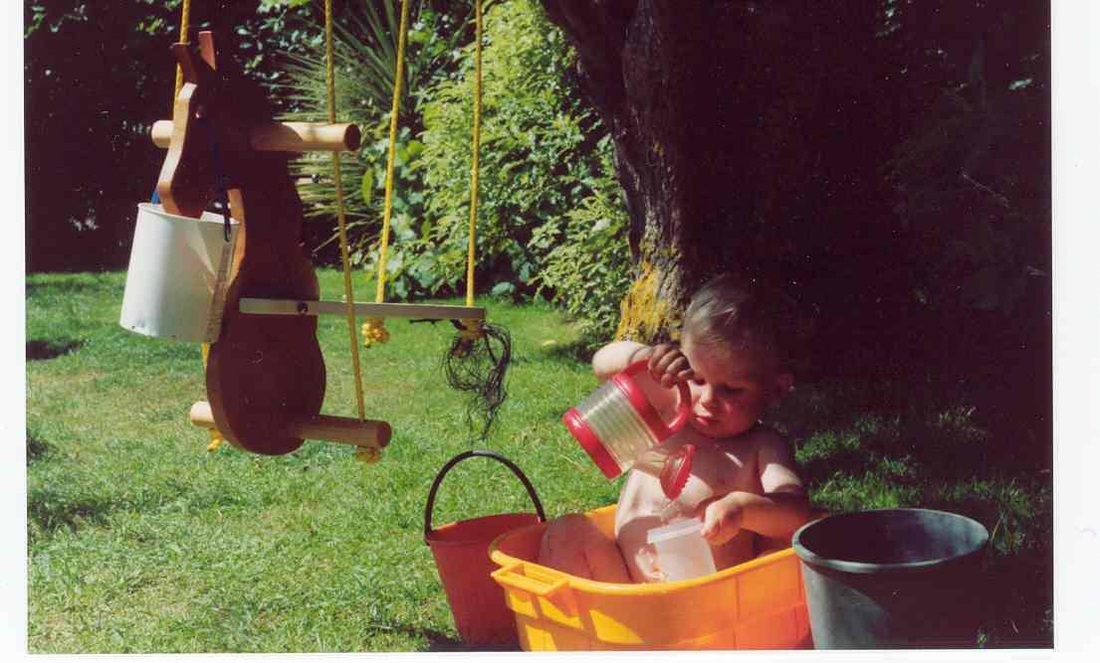
The photo shows a young boy pouring water from one container to another, sitting in a larger container. Beside him is a swing, hung from a tree, shaped like a horse. By bringing containers to a park, and having a water supply available, it is possible to recreate the experiences he would have had at home, if he lived in a property with its own garden. It comes down to how we design and develop our public spaces.

Given our need and right to access nature for health and well-being it is vital that we, as landscape and urban designers, provide those spaces in and around housing developments, wherever they may be. City parks can recreate the feeling of home gardens. It just takes a new way of looking at landscape.

0 Comments

    Author

    Gayle Souter-Brown founded Greenstone Design in UK in 2006, serving Europe, Africa, Asia, South and North America. Since 2012 the expanding team is delighted to offer the same salutogenic landscape architecture + design practice from NZ to the southern hemisphere, giving a truly global reach.

    Archives

    July 2016
    April 2015
    November 2014
    October 2014
    September 2014
    March 2014
    December 2013
    July 2013
    May 2013
    April 2013
    December 2012
    November 2012
    October 2012
    July 2012
    June 2012
    May 2012
    April 2012

    Categories

    All
    Anxiety Disorder
    Bio Diverse Planting
    Bio-diverse Planting
    Biophilia And Living Cities
    Care Home Design
    Cognitive Functioning
    Depression
    Food Waste Initiatives
    Garden Design Seminar
    Garden Design Workshop
    Gardens For Health & Well Being
    Gardens For Health & Well-being
    Green Roofs
    Green Space For Health
    Healing Gardens
    Health And Well Being
    Health And Wellbeingb994dbc193
    Hospital Gardens
    Landscape Architecture
    Landscape Design
    Local Landscape Architect
    Local Landscape Designer
    Mental Health
    Mental Health And Exercise
    Natural Play
    Resilient Community
    Salutogenic Design
    Sensory Gardens
    Social Housing
    Stressed Execs
    Sustainable Design
    Sustainable Design Workshop
    Sustainable Living
    Sustainable Urban Design
    Sustainable Urban Drainage
    Unroc Article 6
    Urban Agriculture
    Urban Design
    Urban Farms
    Urban Food Growing
    Urban Trees

    RSS Feed

Disclaimer | Privacy | Copyright Information
Why Greenstone
  • Sustainability
  • Sensory Gardens
  • Health and Well-being
  • About us
Services
  • Gardens for health
    > active ageing
    > therapeutic horticulture
  •  > sensory gardens

  • Commercial/Public Spaces
          > urban design   
          > care homes / dementia care
          > resorts                 
  • Play area design
          > natural play
          > inclusive play
         
  • Education
          > outdoor learning
          > special needs
          > school grounds design
          >
Professional Development   
News and events
  • award winning design
  • community projects

Links


Resources


Contact us


Greenstone Design Limited is a for-purpose company registered in New Zealand No 373 2566
Registered Office: 384 Minchins Rd, Sheffield, NZ 7580.
GST registration No 108 766 034


Corporate Social Responsibility | Diversity & Equality | Environment al Policy
Quality Management Statement

© Greenstone Design Limited 2001-2023 All rights Reserved